Moving to Portugal from China: Visas, Paperwork and Settling In
Chinese nationals have been among the most significant investor groups in Portugal for over a decade, and the community in Lisbon and the Algarve is well established. The routes into Portugal have shifted considerably though, and a lot of the advice circulating online describes rules that no longer apply.
Before you rely on any of this: Portuguese immigration rules change often, and they changed substantially in 2024 and again in 2026. Requirements also differ by consulate and by nationality. Treat this as orientation, then confirm your own case with the Portuguese consulate that covers you, with AIMA, or with a qualified immigration lawyer. Nothing here is legal advice.
The apostille change nobody mentions
This is the single most useful recent development for Chinese applicants. Mainland China acceded to the Hague Apostille Convention with effect from November 2023.
Before that, Chinese documents needed full consular legalisation — notarisation, foreign ministry authentication, then legalisation by the Portuguese embassy. That chain was slow and expensive. Now a single apostille from the Ministry of Foreign Affairs or an authorised provincial foreign affairs office is sufficient, and Portugal accepts it directly.
Hong Kong and Macau were already covered under the Convention long before this. Guidance published before late 2023 is out of date on this point — see our apostille guide.
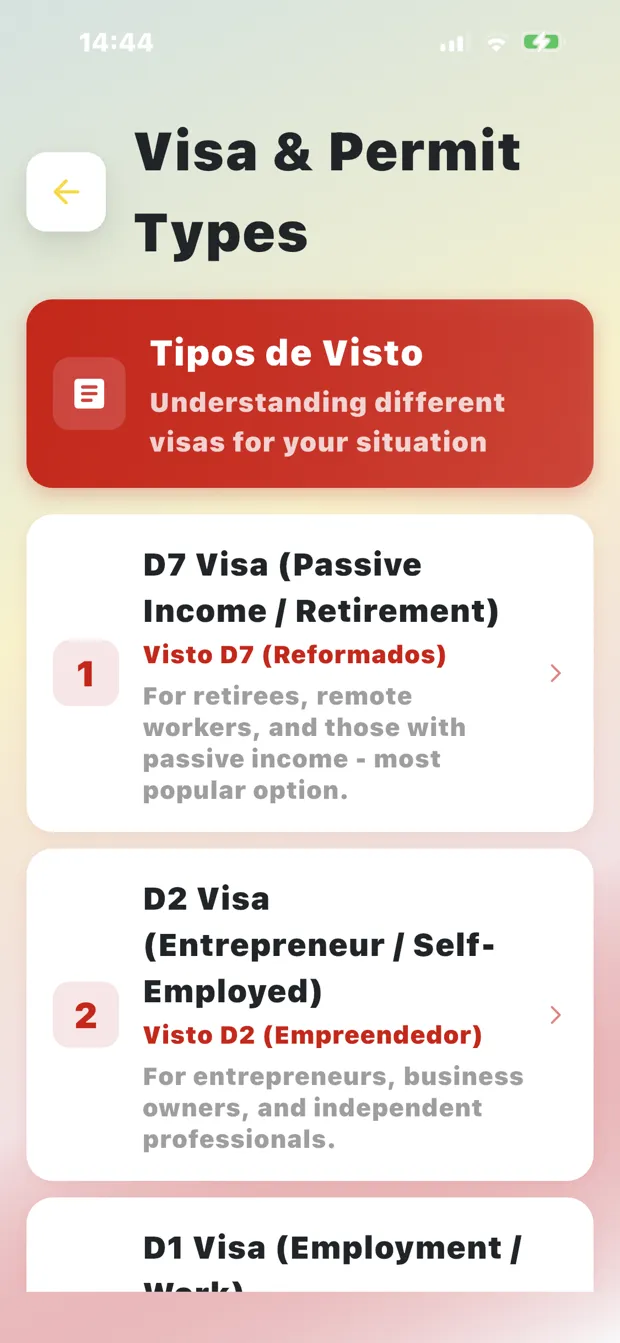
Your visa options
| Route | Fits |
|---|---|
| D2 | Entrepreneurs and business founders — a common route |
| D3 | Highly qualified roles |
| D4 | Students, including the growing number of English-taught degrees |
| D7 | Passive income — pensions, rentals, dividends |
| D8 | Remote work for non-Portuguese clients or employers |
| Golden Visa | Investment-based residency |
On the Golden Visa specifically
Portugal's Golden Visa was historically dominated by Chinese investors, overwhelmingly through property purchase. The property route has since been removed. The programme continues, but through qualifying funds and other categories rather than real estate.
The programme has been reformed repeatedly and remains politically contested, so anything you read that mentions buying an apartment to obtain residency is describing a route that no longer exists. Take current professional advice rather than relying on any summary, including this one.
The Macau connection
Portuguese remains an official language of the Macau SAR alongside Chinese, and Macau hosts the Forum for Economic and Trade Co-operation between China and Portuguese-speaking Countries. For people who have studied or worked in Macau, that is a genuine bridge — the Portuguese used administratively there follows the European standard, the same variant spoken in Portugal.
Note the practical implication if you are learning: Chinese universities and trade programmes often teach Brazilian Portuguese because of the Brazil trade relationship. For Portugal or Macau, that is the wrong variant.
Where the community is
- Lisbon — the largest community, with a well-known concentration of businesses and wholesalers around Martim Moniz, plus restaurants and supermarkets across the city.
- Porto — smaller but established.
- Algarve — retail, restaurants and a substantial share of the earlier property investment.
Chinese supermarkets and restaurants are easy to find in Lisbon and Porto, and considerably harder in small inland towns — worth weighing when choosing where to settle.
What to expect that differs sharply from China
- Everything is slower. Digital government is improving but paper, in-person appointments and queues remain normal. Payment apps are not ubiquitous — cards and the local Multibanco system dominate.
- Shops close. Small businesses shut for lunch, close early, and often do not open Sundays. The 24-hour convenience of Chinese cities does not exist.
- Meal times are late. Dinner rarely starts before 20:00.
- Housing is cold. Portuguese homes are built for summer, with poor insulation and often no central heating. Winters indoors surprise people.
- Bureaucracy runs in Portuguese. English will not carry you at Finanças, AIMA or the town hall.
The language, and why the variant matters
Portuguese is structurally distant from Chinese: verbs conjugate, nouns have gender, and articles exist — none of which Chinese has. That is a real adjustment, though word order is broadly similar and there are no tones to learn. The specifics are in our guide for Chinese speakers.
The important practical point: learn European Portuguese. It is what Portugal speaks, what Macau administers in, and what the CIPLE citizenship exam uses. A2 is required for permanent residency and citizenship, and four to six months of daily practice gets most people there.
Frequently asked questions
Does China issue apostilles for Portugal?
Yes. Mainland China acceded to the Hague Apostille Convention with effect from November 2023, so a single apostille from the Ministry of Foreign Affairs or an authorised provincial foreign affairs office replaces the previous consular legalisation chain. Hong Kong and Macau were already covered.
Can I still get a Portugal Golden Visa by buying property?
No. The real estate route was removed from the Portuguese Golden Visa programme. The programme continues through qualifying funds and other categories, but any guidance describing property purchase as a path to residency is out of date. Take current professional advice.
Is Portuguese still official in Macau?
Yes. Portuguese remains an official language of the Macau Special Administrative Region alongside Chinese and is used in law and government. Macau also hosts the Forum for Economic and Trade Co-operation between China and Portuguese-speaking Countries.
Should Chinese learners study European or Brazilian Portuguese?
For Portugal or Macau, European Portuguese, since Macau's administrative and legal Portuguese follows the European standard. Many Chinese university and trade programmes teach Brazilian Portuguese because of the Brazil trade relationship, which is the wrong variant for Portugal.
Where do Chinese people live in Portugal?
The largest community is in Lisbon, with a well-known concentration of businesses around Martim Moniz plus restaurants and supermarkets across the city. There are smaller established communities in Porto and in the Algarve, where retail and restaurants are common.
Learn the variant Portugal and Macau actually use
Chinese programmes often teach Brazilian Portuguese for the Brazil trade. For Portugal and Macau that is the wrong variant. Portugal Lifestyle Pro teaches European Portuguese only, with native Lisbon and Porto audio, full CEFR levels and the vocabulary you need at AIMA and Financas.
Download Free on the App Store Google Play Web App
Free download · 7-day free trial · 500+ lessons · Native Lisbon audio
On the App Store as Learn European Portuguese Pro
What should we build next?
This guide exists because someone asked for it. If there's a topic, lesson type or feature you want in Portugal Lifestyle Pro, tell us — it's five questions and takes about two minutes.
Share your ideas & feedback → No account needed · Email optional · We read every answer