Portuguese for Indian Speakers: Why You Have a Head Start
Indian speakers tend to underestimate how much of Portuguese grammar they already understand instinctively. Gender on nouns, verbs that change with the person, nasal vowels — features that baffle Chinese and Japanese learners are already familiar if you speak Hindi, Marathi, Konkani, Gujarati or Punjabi.
The short version: your grammar instincts transfer well, your multilingualism is a genuine advantage, and your English gives you thousands of shared Latin roots for free. The work is in word order, a handful of consonants, and European Portuguese listening.
Four advantages you already have
- Grammatical gender. Hindi, Marathi, Gujarati and Konkani all assign gender to nouns, with adjectives agreeing. Portuguese does the same: o carro branco, a casa branca. You already have the mental category — you just learn which words fall where.
- Verb agreement. Indian languages conjugate verbs for person and number. The idea that eu vou, tu vais and ele vai are different forms of one verb needs no explaining.
- Nasal vowels. Portuguese pão, mãe and bem use nasalisation that Hindi already marks with chandrabindu. This defeats most English speakers and costs you very little.
- You are already multilingual. Most Indians handle two or three languages daily. That is measurable, proven language-learning capacity, and it is the single best predictor of how fast a fourth comes.
Add English to that: Portuguese and English share enormous Latin vocabulary. Nação, informação, possível, importante, universidade need almost no learning at all.
Where the real work is
Word order
Hindi and most Indian languages put the verb last. Portuguese puts it in the middle.
| Hindi structure | Portuguese | English |
|---|---|---|
| मैं रोटी खाता हूँ (I bread eat) | Eu como pão | I eat bread |
| वह किताब पढ़ता है (He book reads) | Ele lê um livro | He reads a book |
Postpositions become prepositions too — Portuguese puts them before the noun. Both habits shift through speaking practice rather than study.
Consonants
| Feature | What happens |
|---|---|
| Retroflex t / d | Portuguese has only dental t and d. Substituting retroflex ट / ड produces the most recognisable Indian accent in Portuguese. |
| Aspiration | Hindi distinguishes क from ख meaningfully. Portuguese does not, so aspirated consonants sound odd rather than wrong. |
| The two R sounds | caro (expensive) uses a light tap; carro (car) uses a strong guttural R quite unlike Hindi र. |
| v / w | Several Indian languages treat these as one sound. Portuguese vinho needs a firm v. |
European Portuguese listening
The hardest part for everyone. Portugal swallows unstressed vowels: telefone lands closer to "tlefon". Train exclusively on Portugal-recorded audio from day one — see our EP vs Brazilian comparison and pronunciation guide.
The food history you're already eating
The cultural overlap here is deeper than most people realise, and it runs through the kitchen. The Portuguese reached India in 1498 and controlled Goa from 1510, and the exchange left permanent marks on both cuisines:
| Indian word or dish | Portuguese origin |
|---|---|
| vindaloo | carne de vinha d'alhos — meat in wine and garlic |
| pav (as in pav bhaji, vada pav) | pão — bread |
| chilli, potato, tomato, cashew, papaya, pineapple | All introduced to India through Portuguese trade routes |
| sorpotel, balchão, bebinca | Goan dishes of direct Portuguese descent |
| piri-piri | Carried between Africa, Portugal and India by the same ships |
Konkani absorbed Portuguese words wholesale: janel (janela, window), mez (mesa, table), kadel (cadeira, chair), balde (bucket), toalha (towel). If you speak Konkani, you have a vocabulary head start nobody told you about.
Everyday culture in Portugal
| Situation | What to expect |
|---|---|
| Meal times | Lunch 12:30–14:30, dinner rarely before 20:00 — later than most of India. |
| Greetings | Handshake in business; beijinhos, two kisses on the cheek, socially. No namaste equivalent. |
| Vegetarian food | Improving in cities but genuinely limited in small towns. Fish stock and pork appear in unexpected places, so name the ingredient rather than the diet — our restaurant phrases guide has the wording. |
| Directness | Warm but plain-spoken. Less indirect softening than many Indian workplaces use. |
| Bureaucracy | Slow and paper-heavy, which will feel familiar. It runs in Portuguese. |
| Religion | Predominantly Catholic culture, with Hindu and Muslim communities long established in Lisbon. |
Learn saudade early: a longing for something absent, threaded through fado music and everyday conversation. It's the word Portuguese people reach for most when explaining themselves.
Indians moving to Portugal
Portugal has a growing Indian community, particularly in agriculture in the Alentejo around Odemira, and in hospitality, construction and services around Lisbon. There's also a long-established Indian presence in Lisbon dating back generations.
Two practical points for anyone settling:
- Citizenship requires A2 Portuguese, usually through the CIPLE exam. It catches people out late — see the CIPLE guide.
- Goan heritage may open a different route. People born in Portuguese India before 1961 and their descendants may have a nationality claim. See our guide for Goans.
English is widely spoken in Lisbon and the Algarve, which makes arrival easy and integration slow. The people who settle best learn Portuguese properly — and given the grammar advantages above, you are better placed than most to do it.
Frequently asked questions
Is Portuguese easy for Indians to learn?
Indian speakers have real advantages. Hindi, Marathi, Konkani and Gujarati all have grammatical gender and conjugate verbs for person, which are the features that most confuse Chinese and Japanese learners. Nasal vowels are already familiar, and English gives thousands of shared Latin roots. The main work is word order, retroflex consonants and European Portuguese listening.
Does vindaloo come from Portuguese?
Yes. Vindaloo derives from the Portuguese dish carne de vinha d'alhos, meaning meat in wine and garlic, brought to Goa during Portuguese rule. The Indian version evolved with local spices and chillies, which the Portuguese themselves had introduced to India through their trade routes.
What Indian words come from Portuguese?
Pav, the bread in pav bhaji and vada pav, comes from Portuguese pão. Konkani absorbed many words directly, including janel from janela meaning window, mez from mesa meaning table, kadel from cadeira meaning chair, and balde meaning bucket. Chilli, potato, tomato and cashew all reached India via Portuguese trade.
Do Indians need Portuguese to live in Portugal?
For daily life in Lisbon or the Algarve, English often suffices at first. But Portuguese is needed for tax offices, town halls, AIMA appointments and health centres, and A2 level Portuguese is required for citizenship, normally proven through the CIPLE exam.
Should Indians learn European or Brazilian Portuguese?
European Portuguese, if the goal is Portugal or Goan heritage. Portugal's variant differs from Brazilian in pronunciation, vocabulary and pronoun placement, and the CIPLE citizenship exam uses European Portuguese. Most major apps, including Duolingo, teach only the Brazilian variant.
Language and culture together
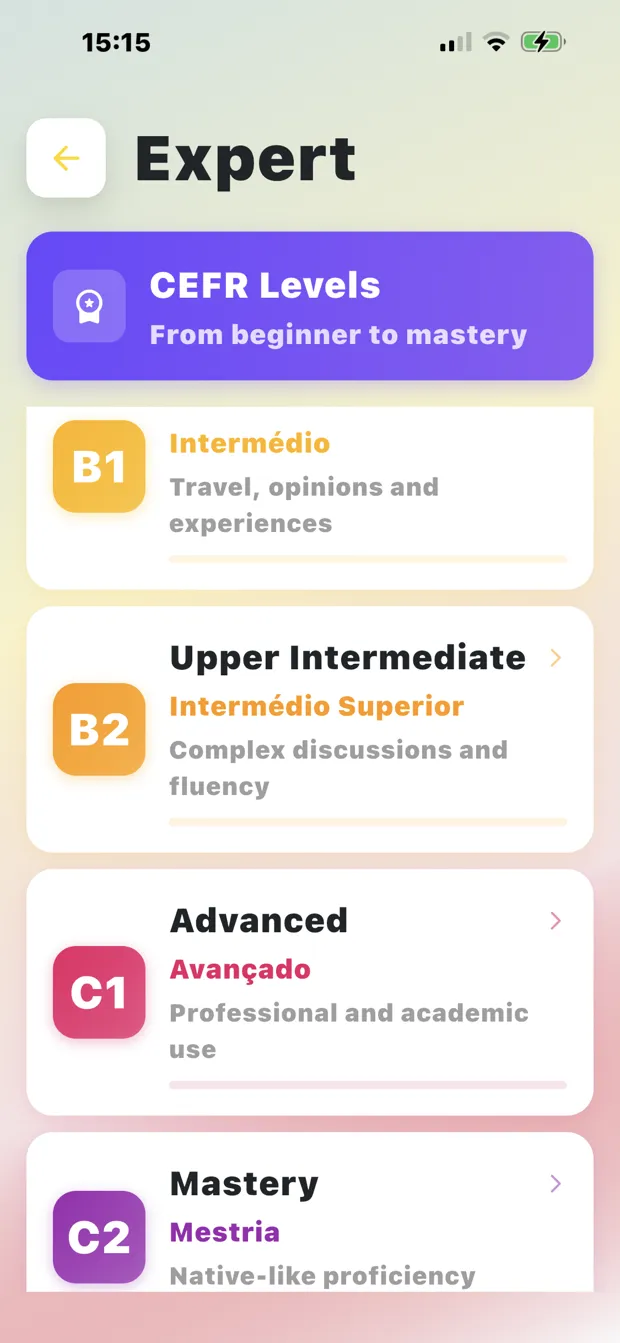
Portugal Lifestyle Pro teaches European Portuguese with native Lisbon and Porto audio, plus culture stories, guides to all 18 districts and practical AIMA and immigration content. It follows the CEFR framework from A1 to C2, so you can work directly toward the A2 level citizenship requires.
Download Free on the App Store Google Play Web App
Free download · 7-day free trial · 500+ lessons · Native Lisbon audio
On the App Store as Learn European Portuguese Pro
What should we build next?
This guide exists because someone asked for it. If there's a topic, lesson type or feature you want in Portugal Lifestyle Pro, tell us — it's five questions and takes about two minutes.
Share your ideas & feedback → No account needed · Email optional · We read every answer