Indians Moving to Portugal: Visas, Paperwork and Settling In
Indians are among the larger recent arrival groups in Portugal, working in agriculture in the Alentejo, in hospitality and construction around Lisbon and the Algarve, and increasingly in technology. There is also a long-established Indian community in Lisbon going back generations, and a separate historical thread through Goa.
Before you rely on any of this: Portuguese immigration rules change often, and they changed substantially in 2024 and again in 2026. Requirements also differ by consulate and by nationality. Treat this as orientation, then confirm your own case with the Portuguese consulate that covers you, with AIMA, or with a qualified immigration lawyer. Nothing here is legal advice.
Your visa options
| Route | Fits |
|---|---|
| D1 | You already have a Portuguese employment contract |
| D2 | Freelancers, self-employed and business founders |
| D3 | Highly qualified roles — common for IT professionals |
| D4 | Students on courses longer than a year |
| D6 | Joining a spouse or parent already resident |
| D7 / D8 | Passive income, or remote work for non-Portuguese clients |
| Job seeker visa | Entering legally to look for work |
You apply at the Portuguese consulate covering your state of residence, and in India appointment booking and document submission are commonly handled through an external provider. Check the current arrangement with the Portuguese Embassy in New Delhi or the consulate covering you — see applying from Asia.
Apostille: the Indian process specifically
India is a Hague Convention member, so your documents take the apostille route rather than consular legalisation. The chain usually runs:
- Authentication at state level — typically the Home Department, GAD or an equivalent state authority, or a designated agency.
- Apostille by the Ministry of External Affairs (MEA), generally through authorised outsourcing centres rather than in person.
- Certified Portuguese translation, covering the apostille itself.
Educational certificates often need HRD or university-level attestation before the state stage, which adds time. Full detail in our apostille guide.
One India-specific warning: name consistency. Differences between how your name appears on a passport, a birth certificate, a degree and a bank record — initials, expanded surnames, patronymics, spelling variants — cause repeated problems. Sort out an affidavit of name equivalence early rather than at the consulate window.
The OCI question, before you go further
India does not permit dual citizenship. This matters much later, but it is worth understanding now, because the whole point of the residency path for many people is eventually a Portuguese and therefore EU passport.
If you naturalise as Portuguese, you are generally required to surrender your Indian passport. Many people then apply for OCI (Overseas Citizen of India), which grants long-term rights to live and work in India but is not citizenship — no vote, and no Indian passport.
It is a serious and largely irreversible decision, and one to take proper advice on rather than discovering at the end of a five-year process.
Where the community is
- Lisbon — the largest and longest-established community, with temples, mosques, grocers and restaurants, particularly around Martim Moniz and Mouraria.
- Odemira and the Alentejo — significant agricultural employment, largely Punjabi and Nepali workers.
- Algarve — hospitality and construction, especially seasonal.
- Porto — smaller but growing, with technology roles.
Practical things that make life easier: Indian groceries are widely available in Lisbon, several Hindu and Sikh places of worship operate in the Lisbon area, and halal and vegetarian food is far easier to find in the cities than in small towns — worth factoring into where you settle.
What Indian arrivals consistently underestimate
- Salaries. Portuguese pay is low by Gulf, UK or US standards. The cost of living is lower too, but Lisbon housing has moved a long way, so run the actual numbers.
- Winter housing. Portuguese homes are built for summer. Poor insulation and no central heating come as a genuine shock in January.
- The pace of bureaucracy. This one will feel familiar. It runs in Portuguese.
- The language requirement. A2 Portuguese for permanent residency and citizenship, and almost nobody plans for it at the start.
You are better placed than most to learn it
Genuinely. Hindi, Marathi, Gujarati, Punjabi and Konkani all have grammatical gender and verbs that change with the person — the two features that most confuse Chinese and Japanese learners. Nasal vowels are already familiar. Most Indians are also multilingual, which is the strongest predictor of picking up another language quickly, and your English gives you thousands of shared Latin roots for free.
The specifics of what transfers and what does not are in our guide for Indian speakers. Learn European Portuguese, not Brazilian — the CIPLE exam and everyday life in Portugal both use the European variant.
Frequently asked questions
How can an Indian citizen move to Portugal?
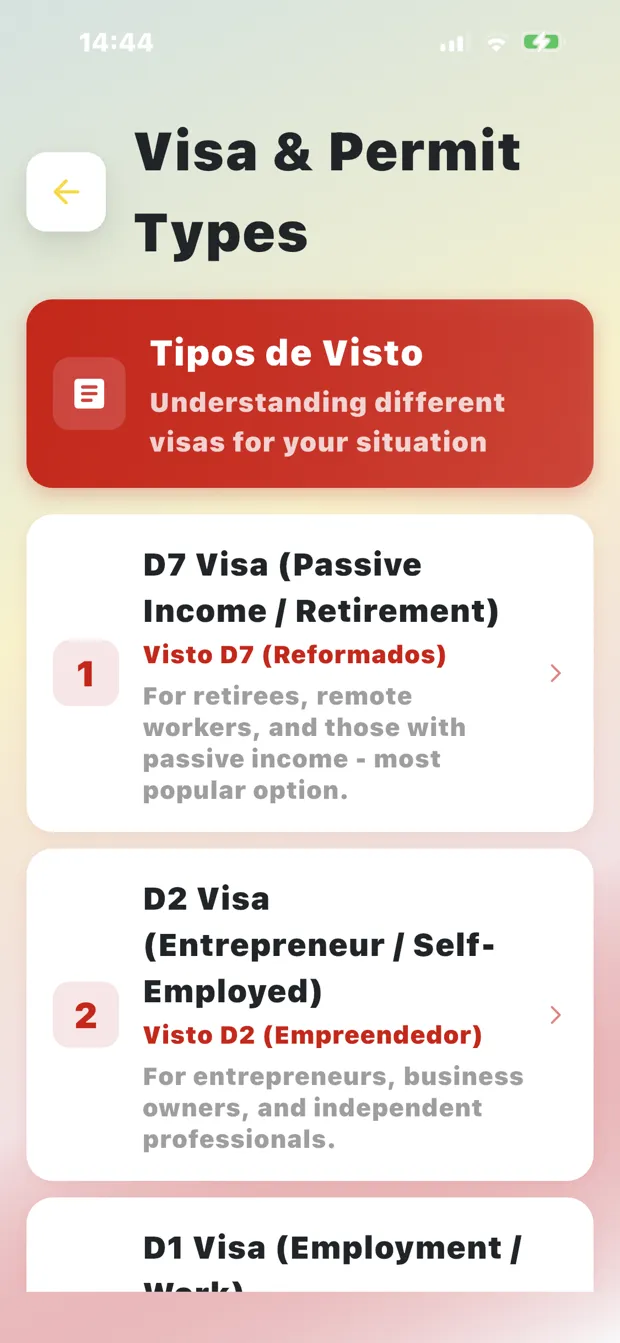
Through a national visa obtained before travelling. Common routes are the D1 with a job offer, D3 for highly qualified roles such as IT, D2 for freelancers and entrepreneurs, D4 for students, D7 or D8 for passive income and remote work, and the job seeker visa to look for work legally.
How do I apostille Indian documents for Portugal?
India is a Hague Convention member. Documents are usually authenticated at state level first, then apostilled by the Ministry of External Affairs through authorised outsourcing centres, then translated into Portuguese with the apostille included. Educational certificates often need HRD or university attestation beforehand.
Can I keep my Indian passport if I become Portuguese?
No. India does not permit dual citizenship, so acquiring Portuguese nationality generally requires surrendering your Indian passport. Many people then apply for Overseas Citizen of India status, which allows long-term residence and work in India but is not citizenship and carries no vote.
Where do Indians live in Portugal?
The largest and longest-established community is in Lisbon, particularly around Martim Moniz and Mouraria. There is significant agricultural employment around Odemira and the Alentejo, hospitality and construction work in the Algarve, and a smaller growing presence in Porto.
Is Portuguese hard for Indians to learn?
Indian speakers have real advantages. Hindi, Marathi, Gujarati, Punjabi and Konkani all have grammatical gender and conjugate verbs for person, which are the features that most confuse other learners. Nasal vowels are already familiar, and English provides many shared Latin roots.
You have a head start — use it
Indian language speakers already have gender and verb agreement, the parts that stop most learners. Portugal Lifestyle Pro teaches European Portuguese with native Lisbon and Porto audio, follows CEFR from A1 to C2, and includes the AIMA and everyday vocabulary you need from your first week.
Download Free on the App Store Google Play Web App
Free download · 7-day free trial · 500+ lessons · Native Lisbon audio
On the App Store as Learn European Portuguese Pro
What should we build next?
This guide exists because someone asked for it. If there's a topic, lesson type or feature you want in Portugal Lifestyle Pro, tell us — it's five questions and takes about two minutes.
Share your ideas & feedback → No account needed · Email optional · We read every answer