European Portuguese Pronunciation Guide: Sound Like a Local
Learners joke that European Portuguese sounds like Russian — consonant clusters, vanishing vowels, shushing s sounds. It's learnable, but only if you train pronunciation deliberately instead of guessing from spelling.
The five sounds that define European Portuguese
- ão — the famous nasal diphthong in pão (bread), não (no), cão (dog). Say "ow" while letting air through your nose. It's the sound most worth mastering first.
- Swallowed unstressed vowels. Pessoa → "psoa", telefone → "tlefon". This is why Portugal-Portuguese feels fast: entire syllables compress.
- S at the end of syllables → "sh". Cascais = "Cash-caish", estás = "shtash". This one instantly marks European vs Brazilian.
- Nasal vowels with m/n. Bem, sim, um — the m isn't pronounced; it nasalises the vowel.
- The closed "e" in words like pequeno — barely voiced at all.
A method that works
- Listen before you read. Hear each new word before seeing its spelling, or your English reading habits will sabotage you.
- Shadow native audio. Play a phrase, repeat it immediately, mimicking rhythm — not just sounds. European Portuguese rhythm is stress-timed, like English, which is actually an advantage for English speakers.
- Record yourself or use AI feedback. You can't fix what you can't hear. Compare your recording against the native version syllable by syllable.
- Drill minimal pairs. avô/avó (grandfather/grandmother) differ only in vowel openness — pairs like these tune your ear fast.
How long until people understand you?
Pronunciation compounds quickly: two weeks of daily 10-minute shadowing makes you noticeably clearer. Perfect accent isn't the goal — being effortlessly understood at the café is.
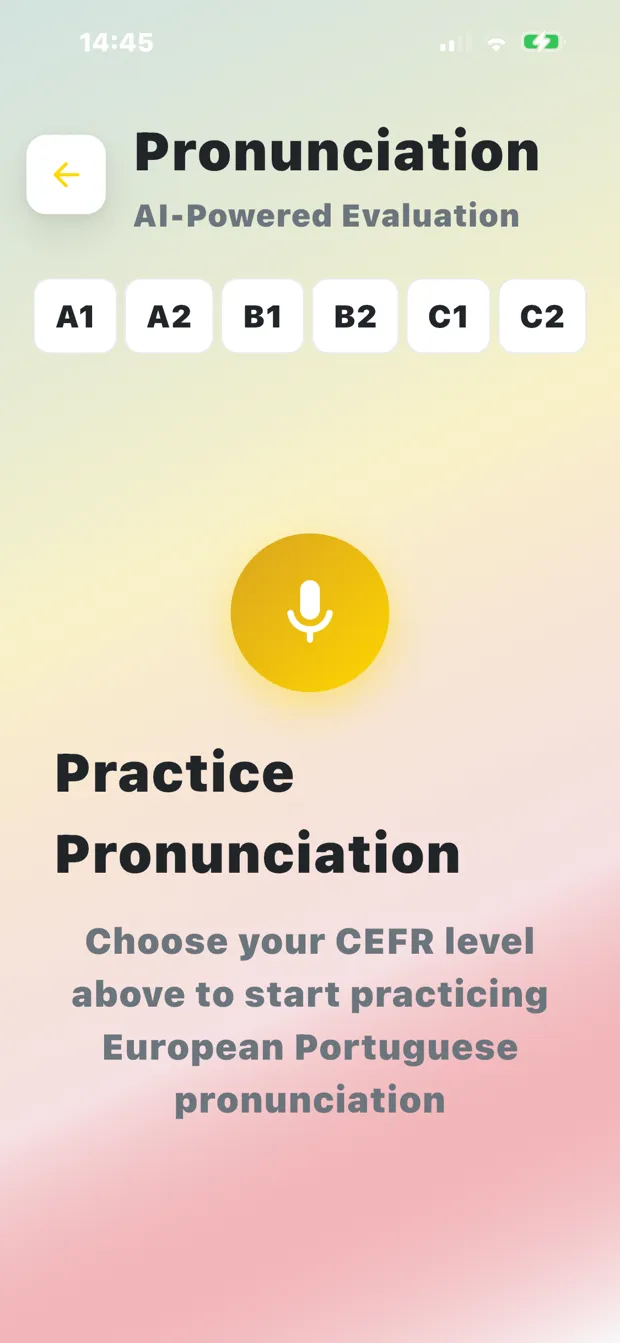
Do it with Portugal Lifestyle Pro
Every phrase in Portugal Lifestyle Pro has native audio recorded in Lisbon and Porto, and the Pronunciation Test with AI voice feedback scores your attempts so you know exactly which sounds need work. Shadow the daily phrases, then test yourself — the feedback loop is what builds a real accent.
Download Free on the App Store Google Play Web App
Free download · 7-day free trial · 500+ lessons · Native Lisbon audio
On the App Store as Learn European Portuguese Pro
What should we build next?
This guide exists because someone asked for it. If there's a topic, lesson type or feature you want in Portugal Lifestyle Pro, tell us — it's five questions and takes about two minutes.
Share your ideas & feedback → No account needed · Email optional · We read every answer