Brits in the Algarve: Where They Live and Why
The Algarve holds the largest British community in Portugal, and one of the largest anywhere in continental Europe. There are British-run pubs, English-language newspapers, Anglican churches, bowls clubs and cricket. For a British buyer, it remains one of the easiest places on the continent to land.
What follows is where that community actually sits, how Brexit changed the picture, and the one mistake that repeats generation after generation.
Why the Algarve, and why Brits
The connection is genuinely old. The Anglo-Portuguese Alliance, signed in 1386, is the oldest active diplomatic alliance in the world — and while nobody moves to Faro because of a medieval treaty, the long familiarity matters. British tourism to the Algarve took off in the 1960s once Faro airport opened up cheap charter flights, and property development followed straight behind.
The practical draws today are unchanged: three hours from the UK, English widely spoken, mild winters, low crime, healthcare that works, and property that still looks reasonable next to southern England.
Where Brits actually live
| Area | Character | Typical profile |
|---|---|---|
| Albufeira & Praia da Luz | Established resorts, very high English use | Retirees, holiday-home owners |
| Carvoeiro & Ferragudo | Smaller, prettier, long-standing British presence | Retirees, second homes |
| Lagos | Real working town with history and a marina | Mixed ages, year-round residents |
| Vilamoura & Almancil | Marina, golf, premium property | Golfers, higher budgets, families |
| Quinta do Lago & Vale do Lobo | The luxury end | Wealthy retirees and second homes |
| Tavira & the east | Quieter, more Portuguese, cheaper | Those seeking authenticity over convenience |
| Inland (Silves, São Brás, Loulé) | Working towns, best value | Longer-term integrators |
A rough rule: the further east or inland you go, the cheaper it gets, the fewer Brits you'll meet, and the more Portuguese you'll need. That trade-off is the whole decision.
What Brexit changed
This is the biggest shift in decades, and it split the community in two.
Those already resident before the end of the transition period are covered by the Withdrawal Agreement and retain broad residence rights, typically evidenced by a specific residency document. If that's you, keep your paperwork current — the protections are real but conditional on maintaining your status.
Those arriving since are third-country nationals, the same as Americans or Canadians. In practice that means:
- No automatic right to live in Portugal. You need a visa — most commonly the D7 for passive income or pensions, or the D8 for remote workers. See our visa guide.
- Visitors are limited by the Schengen 90 days in any 180 rule. This caught out a great many second-home owners who had assumed they could come and go freely.
- Healthcare access, driving licence exchange and pet travel all now follow third-country procedures.
Rules and processing times continue to change, and Portuguese nationality law was amended in 2026. Confirm your own position with AIMA or an immigration solicitor rather than relying on any general guide, this one included.
The infrastructure that exists
The community is well served. English-language newspapers cover the region, there are Anglican and other English-speaking congregations, British-oriented shops sell familiar groceries, and clubs cover everything from bowls and bridge to cricket, walking and amateur dramatics. Several international schools follow the British curriculum — see our international schools guide.
For a family arriving with school-age children and no Portuguese, that infrastructure genuinely lowers the barrier.
The mistake that repeats
It's possible to live in Albufeira or Carvoeiro for twenty years and never learn Portuguese. Plenty have. The costs show up slowly:
- Officialdom doesn't bend. Finanças, the town hall, AIMA and the health centre operate in Portuguese. People end up paying intermediaries to do things they could do themselves.
- Citizenship requires A2 Portuguese. Post-Brexit, far more Brits are pursuing Portuguese nationality to recover EU rights — and discovering the CIPLE language requirement late, sometimes with only months to prepare.
- Emergencies are worse. Hospital admissions, insurance disputes and legal problems are harder in a language you don't speak.
- The social ceiling is real. Portuguese neighbours are welcoming, and the wall between polite acquaintance and friendship is almost purely linguistic.
One specific warning: many British residents pick up Portuguese from apps that teach the Brazilian variant. Duolingo has no European Portuguese course at all. You'll be understood, but you won't understand the reply, and it won't match the CIPLE exam. Our EP vs BR comparison explains the gap.
Making it work long term
The British residents who seem happiest after ten years share a pattern: they use the community as a landing pad rather than a permanent address, learn enough Portuguese to handle their own affairs, shop and eat where locals do, and pick up something — a sports club, a choir, volunteering — where the working language is Portuguese.
None of that requires fluency. A2 covers most of it, and it's four to six months of daily practice.
Frequently asked questions
How many British people live in the Algarve?
The Algarve is home to the largest British community in Portugal, generally estimated in the tens of thousands of registered residents, with many more second-home owners who spend part of the year there. Official figures vary depending on whether they count registered residents or property owners.
Can Brits still move to the Algarve after Brexit?
Yes, but no longer automatically. UK nationals arriving after the transition period are third-country nationals and need a visa, most commonly the D7 for pensions and passive income or the D8 for remote workers. Those already resident before the cut-off are covered by the Withdrawal Agreement.
How long can a British person stay in Portugal without a visa?
Visitors are limited to 90 days in any rolling 180-day period across the Schengen area. This caught out many second-home owners after Brexit. Staying longer requires an appropriate residency visa.
Where do most British expats live in the Algarve?
The largest concentrations are in the central and western Algarve, particularly Albufeira, Carvoeiro, Praia da Luz, Lagos, Vilamoura and Almancil, plus the luxury resorts of Quinta do Lago and Vale do Lobo. The eastern Algarve around Tavira is quieter and more Portuguese.
Do British residents in the Algarve need to speak Portuguese?
Not for daily life in the main resort areas, where English is widely spoken. But Portuguese is needed for tax offices, town halls, AIMA appointments and health centres, and A2 level Portuguese is required for citizenship, which many Brits have pursued since Brexit to regain EU rights.
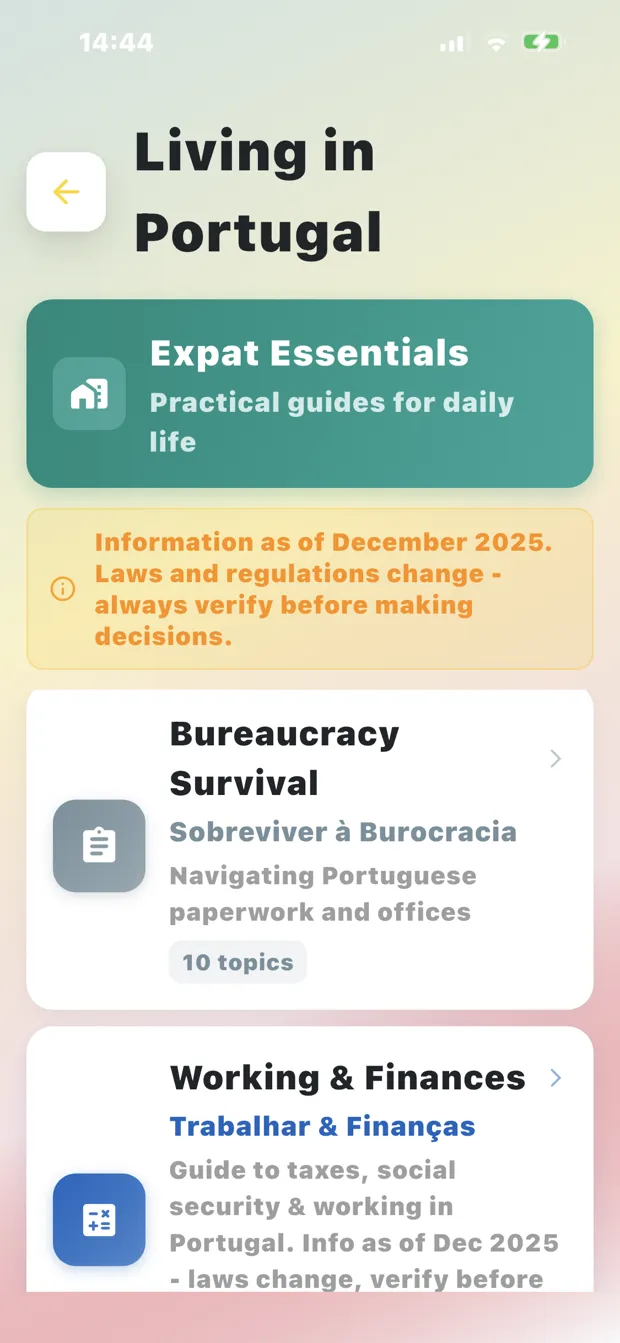
Learn the language that goes with it
Since Brexit, far more British residents are pursuing Portuguese citizenship, and the A2 language requirement catches people out late. Portugal Lifestyle Pro follows the CEFR framework from A1 upward in European Portuguese, with native Lisbon audio and the exact vocabulary CIPLE tests.
Download Free on the App Store Google Play Web App
Free download · 7-day free trial · 500+ lessons · Native Lisbon audio
On the App Store as Learn European Portuguese Pro
What should we build next?
This guide exists because someone asked for it. If there's a topic, lesson type or feature you want in Portugal Lifestyle Pro, tell us — it's five questions and takes about two minutes.
Share your ideas & feedback → No account needed · Email optional · We read every answer