Portuguese Food Guide: What to Eat, Region by Region
Portuguese food is regional to an almost stubborn degree. A dish that defines Porto is barely eaten in the Algarve, and every town will tell you its version of something is the correct one. It is also, by European standards, remarkably cheap — a proper sit-down lunch with wine still costs less than a sandwich in many capitals.
This guide covers what to eat, where it belongs, and the Portuguese words you need to order it without pointing.
Bacalhau: the national obsession
Salted cod. The Portuguese say there are 365 ways to cook it, one for every day of the year, and while nobody has verified that, the point stands. It's dried and salted, then soaked before cooking — which is why it tastes nothing like fresh cod.
- Bacalhau à Brás — shredded cod with onions, straw potatoes and scrambled egg. The most beginner-friendly version.
- Bacalhau com Natas — baked with cream and potato. Rich, comforting, very popular with children.
- Bacalhau à Gomes de Sá — from Porto, with potatoes, onion, olives and boiled egg.
- Pastéis de bacalhau — fried cod cakes, sold everywhere as a snack.
Christmas Eve dinner in most Portuguese households is boiled bacalhau with potatoes, cabbage and a great deal of olive oil. Simple, and non-negotiable.
Signature dishes by region
| Dish | Where it belongs | What it is |
|---|---|---|
| Francesinha | Porto | Ham, sausage and steak between bread, under melted cheese and a spicy beer-tomato sauce |
| Cozido à Portuguesa | Nationwide, strongest in the North | Boiled meats, sausages and vegetables — the big Sunday dish |
| Caldo Verde | Minho, now nationwide | Potato soup with shredded kale and a slice of chouriço |
| Cataplana | Algarve | Seafood stew cooked in a hinged copper pan |
| Carne de Porco à Alentejana | Alentejo (despite the clams) | Pork with clams, coriander and potatoes |
| Açorda | Alentejo | Bread, garlic, coriander and olive oil, often with egg |
| Leitão da Bairrada | Bairrada, near Coimbra | Roast suckling pig with crackling |
| Arroz de Marisco | Coast, especially Centro | Soupy seafood rice, served in the pot |
| Sardinhas assadas | Lisbon in June | Charcoal-grilled sardines on bread |
| Bifana | Nationwide | Marinated pork in a bread roll — the everyday street sandwich |
Pastries and sweets
Pastel de nata is the famous one: a custard tart with a blistered, caramelised top and a shatteringly crisp pastry base. The original recipe comes from the Jerónimos Monastery in Belém, and the shop there sells them as Pastéis de Belém — a protected name. Everywhere else they're pastéis de nata. Locals often dust them with cinnamon.
Beyond that: ovos moles from Aveiro (sweet egg yolk in a wafer shell), travesseiros from Sintra (flaky almond pillows), pão de ló (a deliberately underbaked sponge), and queijadas in many regional versions. Portuguese pastry leans heavily on egg yolks — a legacy of convents using egg whites to starch habits and needing something to do with the rest.
Coffee: the rules nobody explains
Portugal runs on coffee, and ordering it wrongly marks you instantly. The default is a short, strong espresso.
| Order this | You get |
|---|---|
| um café (or uma bica in Lisbon) | An espresso — the standard order |
| uma meia de leite | Half coffee, half milk, in a cup |
| um galão | Milkier, served in a tall glass — the closest to a latte |
| um abatanado | A longer black coffee, closer to an americano |
| um pingado | Espresso with a drop of milk |
| um cimbalino | An espresso, but only if you're in Porto |
Coffee is usually drunk standing at the counter, quickly, and costs well under a euro in most of the country. Ordering a large takeaway coffee to walk around with is a very foreign habit.
Wine, and what to drink
Portugal produces far more than port. Vinho Verde from the Minho is young, light and slightly fizzy, drunk cold in summer. The Douro makes serious reds as well as port. The Alentejo produces rounder, warmer reds that dominate supermarket shelves. Madeira is fortified and famously long-lived.
Ask for vinho da casa (house wine) in a small restaurant and you'll usually get something perfectly good for a couple of euros. Ginjinha, a sour-cherry liqueur, is the traditional shot in Lisbon and Óbidos.
How meals actually work
- Couvert: bread, olives, cheese or pâté arrive without being ordered. They are not free. Send them back if you don't want them — nobody minds.
- Lunch runs roughly 12:30–14:30 and is the main meal for many people. Look for the prato do dia or menu executivo, a set lunch that's excellent value.
- Dinner starts late by northern European standards, around 20:00.
- Portions are large. Ordering a meia dose (half portion) is completely normal and common.
- Tipping is modest — rounding up or leaving 5–10% for good service is plenty.
Learning to order in Portuguese changes the experience more than almost anything else. Our restaurant phrases guide covers the exact sentences, and you can drill food vocabulary free in our Portuguese games.
Frequently asked questions
What is the national dish of Portugal?
Bacalhau, or salted cod, is the closest thing to a national dish. The Portuguese say there are 365 ways to prepare it. Cozido à Portuguesa, a boiled meat and vegetable stew, is also considered a national dish and is traditionally eaten on Sundays.
What should I eat in Portugal as a first-time visitor?
Start with a pastel de nata, a bifana pork sandwich, bacalhau à Brás, and grilled fish or sardines. In Porto, try a francesinha. In the Algarve, order a seafood cataplana. Look for the prato do dia at lunch for the best value.
Is Portuguese food spicy?
Generally no. Portuguese cooking relies on olive oil, garlic, coriander, bay and paprika rather than heat. The main exception is piri-piri chicken, and even that is usually served with the chilli sauce on the side so you control the heat.
Why does the bread arrive before I order in Portugal?
That's the couvert — bread, olives, cheese or pâté brought automatically at the start of a meal. It is charged for, though it's usually only a few euros. You can politely decline it and it will be taken away and not billed.
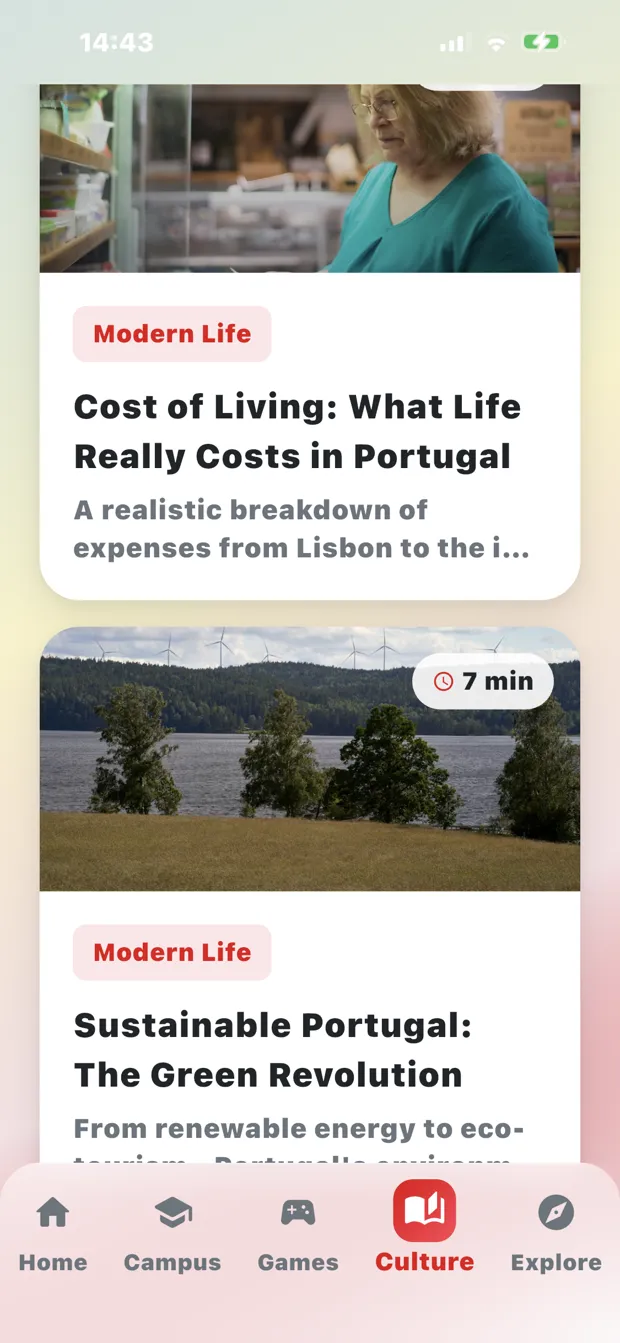
Learn the language that goes with it
Food is the fastest route into Portuguese culture and vocabulary. Portugal Lifestyle Pro teaches the food and restaurant words you'll actually use, with native Lisbon audio so you can order confidently — plus culture stories on the traditions behind the dishes.
Download Free on the App Store Google Play Web App
Free download · 7-day free trial · 500+ lessons · Native Lisbon audio
On the App Store as Learn European Portuguese Pro
What should we build next?
This guide exists because someone asked for it. If there's a topic, lesson type or feature you want in Portugal Lifestyle Pro, tell us — it's five questions and takes about two minutes.
Share your ideas & feedback → No account needed · Email optional · We read every answer